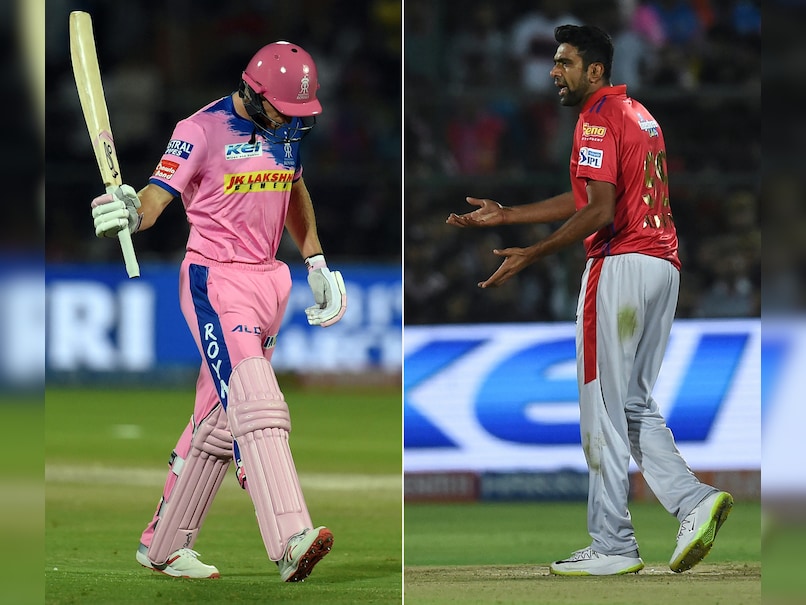
The Infamous Moment in IPL History
The Indian Premier League (IPL) has seen its fair share of controversies, but few incidents have sparked as much debate as Ravichandran Ashwin's run-out of Jos Buttler at the non-striker's end during the 2019 season. This moment not only polarised opinions among fans and players, but it also raised critical questions about the ethics of cricket and the unwritten rules that govern the game. In a recent interview, Ashwin opened up about this memorable incident, asserting that he feels no shame about the decision he made on that fateful evening at the Sawai Mansingh Stadium in Jaipur.
The incident occurred on March 25, 2019, during a match between the Rajasthan Royals and Ashwin's Chennai Super Kings. As Buttler, then batting brilliantly, backed up too far from his crease, Ashwin saw a chance for a run-out. He broke the stumps, sending Buttler back to the pavilion. The fallout was immediate: players and fans alike were divided. Was it a clever piece of cricketing acumen or an unsportsmanlike move?
Ashwin's Perspective
In the interview, Ashwin stated, "What is there to be ashamed of? I did what I felt was right in the heat of the moment." This sentiment echoes a larger conversation within the cricketing community about the legitimacy of such run-outs. Traditionally, many view backing up as a part of the game, while others believe that it should be frowned upon. Ashwin, however, argues that it is a legitimate tactic that bowlers can employ to maintain discipline and awareness among batsmen.
Cricket, much like any sport, is constantly evolving. As the IPL continues to grow, so does the scrutiny on players' actions. The 2019 incident became a talking point that transcended the match itself. It sparked debates across social media platforms and cricket forums, urging fans to reassess their understanding of the game's laws.

The Impact on the Game
The run-out incident had ramifications that reached beyond that individual match. It forced players and teams to rethink their strategies, particularly in the context of the non-striker's end. It wasn't just Ashwin's actions that were under the spotlight; the entire ethos of sporting conduct was questioned. How far can a bowler go to prevent runs? Are players obliged to uphold a particular spirit of the game?
As IPL 2026 approaches, the memories of such incidents still linger in the minds of players and fans alike. Many believe that while Ashwin's actions might have been correct according to the laws of cricket, it also highlighted a gap between tradition and modernity in the sport. Teams must now train their batsmen to be more vigilant, knowing that they could be run out at any moment, a lesson that has been reinforced in training camps across franchises.
In discussing the broader implications of this incident, Ashwin mentioned the need for continuous dialogue among players about what's considered acceptable. The cricketing world is vast, and perspectives can vary widely based on culture, experience, and personal beliefs. This incident, he believes, has opened doors for healthy discussions that can lead to better understanding among players.
The Evolution of the Non-Striker's Role
Since the Buttler run-out, the role of the non-striker has seen a noticeable shift. Teams have started placing greater emphasis on awareness and responsibility in the crease. Batsmen are now encouraged to remain vigilant, not just to avoid run-outs, but also to assess every possible opportunity for runs. The dynamics of partnerships have changed, and the game has become more strategic as a result.
Ashwin's run-out forced the cricketing fraternity to confront a critical issue: should the bowler's conduct be subject to scrutiny if it results in a run-out? It revived discussions around the laws of cricket, particularly Law 41.16, which addresses the non-striker leaving the crease. This law is often seen as ambiguous, leading to varied interpretations and applications in different matches.
Reactions from the Cricketing Community
Since that incident, reactions from former players, commentators, and analysts have varied widely. Some laud Ashwin for his quick thinking and assertiveness, while others criticize him for what they perceive as a breach of cricket’s so-called spirit. Former England captain Nasser Hussain suggested that Ashwin's actions were within the spirit of the game, while others have taken a more traditionalist view, arguing that it goes against the unwritten code of conduct in cricket.
Additionally, Buttler himself has expressed mixed feelings about the incident. While he understands the rationale behind Ashwin's decision, he also feels that such actions can set a precedent that may taint the game’s reputation. As a player, he has since adapted his approach, ensuring he maintains an awareness of his position at all times, a change that many batsmen across the league have adopted.
Looking Ahead
As cricket evolves, so too will the debates surrounding controversial moments like these. They serve as a reminder that the game is not just about runs and wickets, but also about the integrity and spirit in which it is played. With IPL 2026 on the horizon, teams and players are likely to keep this incident in mind as they strategize their approach.
Ashwin's reflections on the Buttler run-out remind us that every decision on the field can have significant implications off it. As fans gear up for another season of IPL, these complex narratives enrich the experience, adding layers of intrigue to each match.
In the end, whether players agree or disagree with Ashwin's actions, the conversation they sparked is invaluable. As the cricketing world prepares for the next chapter in its storied history, one thing remains clear: every run-out, every wicket, and every boundary writes a new story into the annals of cricket.
For those looking to witness another historic IPL season, check out our coverage of KL Rahul's Brilliance: A Game-Changer in IPL 2026.
The drama continues to unfold, and the stage is set. Let the IPL 2026 begin.