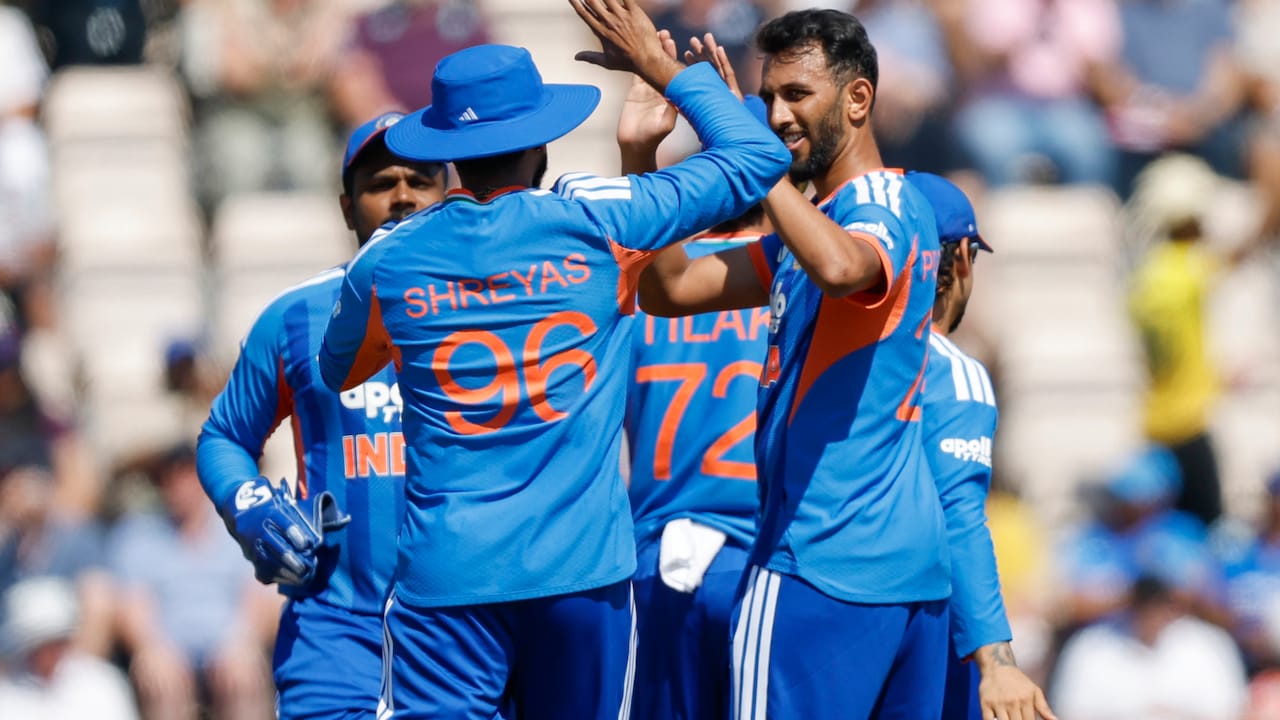
A Troubling Start for Iyer's Captaincy
Shreyas Iyer's tenure as India’s T20I captain has begun with a dismal record, culminating in six losses from seven matches against England. This disappointing series has raised questions regarding his leadership and decision-making capabilities. Following India's impressive batting performances during the series, the team's inability to chase down a target of 258 runs in the fifth T20I further underscored the mounting pressure on Iyer.
In the recent match, England’s formidable batting lineup led by Jos Buttler, who scored a staggering 131, and Harry Brook's unbeaten 95, set a record target that felt insurmountable to the Indian side. The team ended up with a score of 201 for 8, falling short by a significant margin. This match stands as a stark reminder of how crucial T20I cricket can be, with each game testing a captain's tactical acumen and the players' resilience.
Batting Woes and Tactical Missteps
Iyer's captaincy has been marred by tactical misjudgments and missed opportunities. The batting order, which looked promising on paper, often failed to convert starts into substantial scores. Virat Kohli, Ruturaj Gaikwad, and Iyer himself have struggled to maintain consistency, raising alarm bells ahead of the World Cup. The middle order, which seemed solid, has crumbled under pressure, unable to anchor innings when needed the most.
The loss in the fifth T20I showed that despite the individual brilliance of players, strategy and execution are paramount in T20 cricket. England’s attack, comprising the likes of Jofra Archer and Mark Wood, proved too potent for the Indian batsmen, particularly in the death overs, where wickets fell at regular intervals, stalling any momentum the chasing side hoped to build.

England's Dominance and Record-Breaking Performances
Jos Buttler's innings not only contributed to a historic match but also highlighted the stark difference in confidence between the two teams. England has shown relentless aggression throughout this T20I series, shattering records and establishing themselves as a formidable T20 side. Buttler's explosive batting approach, coupled with Brook's elegant stroke play, ensured that India was always on the back foot.
Buttler’s remarkable performance in the fifth T20I reflects England's evolution as a powerhouse in T20 cricket, where aggressive batting and strategic bowling have become their defining traits. They managed to set a world record for the highest total against India in T20I history, further reinforcing the notion that they are the team to beat in the format.
Iyer Under Pressure: What Lies Ahead?
The BCCI's upcoming review of the T20I team's performance is likely to be a critical juncture for Iyer. After what can only be classified as a disappointing series, the board may consider drastic measures, including changes in leadership and team composition. The responsibility falls heavily on Iyer's shoulders to turn things around, but the question remains whether he has the tactical nous to do so.
With the World Cup on the horizon, India must address its batting frailties and find a way to regain momentum. The inability to sustain partnerships and the lack of big scores has placed India in a precarious position. Coach Rahul Dravid's advice and strategy will also play a pivotal role in shaping the team’s future direction.
Looking Ahead: A Critical Period for Indian Cricket
As the cricketing world watches closely, Iyer will need to rally his troops and instill a winning mentality. The upcoming series against more competitive sides will be a litmus test for his leadership skills and the team's ability to cope with pressure. The mental fortitude of this squad will be tested, and Iyer’s ability to inspire confidence will be crucial.
The IPL has historically served as a pressure cooker for players, breeding resilience and competitiveness. However, this series has shown that the transition from IPL to international cricket is fraught with challenges. Players like Vaibhav Sooryavanshi, who have thrived in the IPL, must step up and replicate that form on the international stage. As identified in our analysis of Sooryavanshi's struggles, the challenges of international cricket can often expose players who shine brightly in franchise cricket but falter under national pressure.

Conclusion: A Defining Moment for Indian T20 Cricket
Iyer's captaincy has been a mixed bag thus far, with the potential for greatness marred by inconsistency. The series against England has provided valuable lessons, and with the World Cup looming, it is imperative for both Iyer and his team to reflect, recalibrate, and rise to the occasion. A strong response in forthcoming series could be the turning point needed to restore faith in a team that has so much talent yet remains unfulfilled.
As Indian cricket looks forward to the challenges ahead, the adaptation of strategies, fostering of young talent, and a clear understanding of players' roles will be key. With the IPL offering a platform for the next generation of players, one can only hope that the lessons learned from this series will lead to a more promising future for Indian cricket.
For further details on India's performance and the implications of the England series, check out our earlier coverage on the BCCI review of the T20I team's performance and Vaibhav Sooryavanshi's struggles.